Stating that counter-cyclical measures to combat the impact of the global financial meltdown were important, Subbarao said the government borrowings had gone up 'rapidly and abruptly' hindering transmission of monetary measures to bring about lowering of interest rates.

With high prices remaining a concern, Prime Minister's Economic Advisory Council chairman C Rangarajan on Wednesday said all policy measures, like rate hikes and intervention in grain markets, will be undertaken to bring down inflation to comfort zone of 4-5 per cent.

Gold prices had touched the all-time high of Rs 32,975 per ten gms on November 27, 2012.

A first step in that direction has been taken by the prime minister by setting up an expert panel headed by his economic advisory council.

While eyeing inorganic growth, the company is considering setting up skilling centres in Africa, Bangladesh and Pakistan.

The Prime Minister's economic panel on Wednesday said the government needs to draw a programme to rein in the fiscal deficit of over six per cent which is not sustainable.
The luncheon at his residence was attended by Planning Commission Deputy Chairman Montek Ahluwalia, Chairman of PM's Economic Advisory Council C Rangarajan, former RBI Governor Bimal Jalan, Foreign Secretary Shiv Shanker Menon and officials of the Prime Minister's Office.

Reserve Bank on Friday raised key interest rates by 25 basis points, its 12th such hike since March, 2010.

The dismal factory output growth was on the back of a poor performance by manufacturing, mining and capital goods segments.

Asked whether the Budget should start the process of exist, Rangarajan told reporters in New Delhi, "What is required, is a roadmap towards normalisation".

The country's growth rate is expected to pick up in the second half of this fiscal and reach 6.7 per cent for entire 2012-13, Prime Minister's Economic Advisory Council Chairman C Rangarajan said on Monday.
Inflation, as measured by the Wholesale Price Index, stood at 8.66 per cent in April.
The committee on financial inclusion, headed by C Rangarajan, the chairman of Prime Minister's Economic Advisory Council, has recommended that the profits transferred to their reserves by such banks should be exempted from tax till the banks achieve the standard capital adequacy ratio (CAR).
Committee of secretaries is working on the formula and it is understood that EAC is also being asked to go through the formula.
Rangarajan said that growth has many dimensions to it.
The Prime Minister's Economic Advisory Council has scaled down its growth projection for the Indian economy for 2007-08 to 8.9 per cent from 9 per cent on account of slow expansion in manufacturing and energy generation. Dr C Rangarajan, head of the group of economists released the review of the economy of 2007-08 and said that the economic growth of India would be hovering around 8.5 per cent during 2008-09.

The Food Security Act as proposed by the UPA government assures rice/wheat at Rs 3 a kg to BPL families as a matter of legal right.

To rein in prices, the RBI could tweak in policy rates to either suck out money supply or make borrowings costlier.
Chidambaram to meet ministries' financial advisors, PM's economic council.
The govt. has set up a panel to review the investments and savings in the Indian economy. The panel will review financial savings and suggest improvements.
'It appears the growth rate could be around six per cent'.
Petroleum ministry rejects conclusions of two reports ahead of EGoM.
India's CAD had touched a record high of 4.2 per cent of GDP in 2011-12, on the back of a wider trade gap and lower capital inflows.

The Reserve Bank of India has forecast the economy to grow by 6 per cent with an upward bias.
The paper projects that there will be zero unemployment in 2009 if the economy grows at 9.1 per cent and the labour force continues to grow at 2.93 per cent.
"For some more time inflation can increase. It could touch 13 per cent, but by December it will start declining and is likely to moderate to 8-9 per cent by March 2009," said outgoing chairman of the PMEAC C Rangarajan while releasing the Economic Outlook for 2008-09.
Pointing out that inflation rate is a little beyond comfort zone, the Prime Minister's Economic Advisory Council said the current situation is not favourable for a cut in interest rates. The inflation rate stood at 5.11 per cent for the week ended March 1. For the second week in a row that the rate was over 5%. The RBI aims to limit average rate of inflation for the current fiscal at 5 per cent. When the inflation rate is rising, it is always critical to bring down the rates.
The Prime Minister's Economic Advisory Council has approved Reliance Industries' 4.33 dollars per mBtu price of gas from KG-D6 fields, saying it was in line with industry practices.

Prime Minister's Economic Advisory Council Chairman C Rangarajan dashes bullion firms' duty cut hopes.
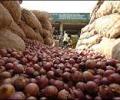
Rangarajan, who was answering questions on onion prices touching Rs 100 per kg in some cities, said the impact on inflation would not last long.

Prime Minister's key economic advisor C Rangarajan on Friday lowered the growth forecast for the current fiscal to 5.3 per cent from 6.4 per cent projected earlier and listed out host of measures including further liberalisation of foreign direct investment norms to improve economic condition.
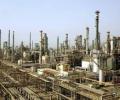
In the January, 2013 Cabinet note on revision of prices of all domestically produced natural gas, the ministry had proposed immediate implementation of the formula suggested by a panel, headed by Prime Minister's Economic Advisory Council Chairman C Rangarajan, for all producers except in cases where the current rate is valid for a certain period.
Budget has laid emphasis on increasing social spends
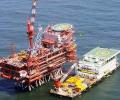
Last month, the government approved the proposal of doubling gas price from RIL's KG basin from $4.2 mmbtu to $8.4 mmbtu from April 1, 2014.

'So far as supervision is concerned, there are enough powers but to take action on public sector banks, consultation with the government is needed.'

In an interview to Business Standard, Rangarajan says CAD will be brought under control at around two per cent of the gross domestic product.
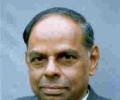
C Rangarajan, chairman, Prime Minister's Economic Advisory Council tells Business Standard that the measures taken by the government will lead to economic growth of at least 6 per cent in FY14 against a decadal-low growth of 5 per cent in FY13.
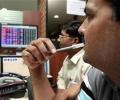
Indian markets may see some weakness in stocks post Fed hike.
 © 2026 Rediff.com - Advertise with us - Disclaimer - Privacy Policy - Sitemap - Feedback - About us - Terms of use - Grievances